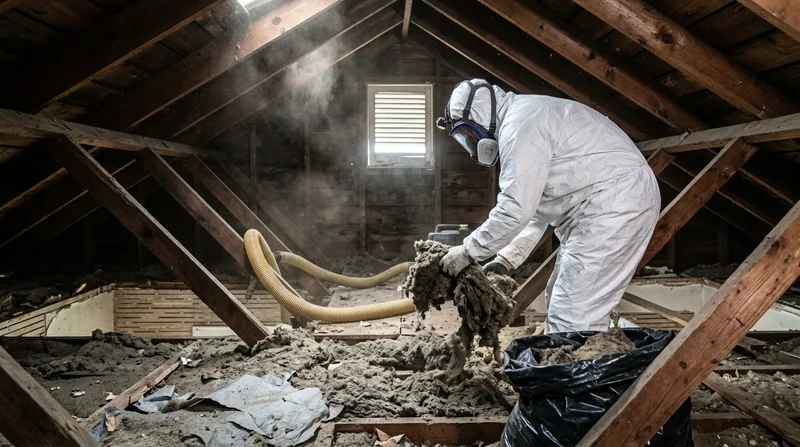




Insulation Removal in Lexington is the critical first step before any spray foam retrofit. Older attics in Chevy Chase and Ashland Park often hold thin, settled batts or blown-in material that no longer performs, while mid-century brick ranches scattered through the city carry decades of compressed fiberglass mixed with dust and rodent debris. Out through Jessamine, Scott, and Bourbon counties, farmhouse attics and barns hold equally failed insulation, unable to manage the mixed-humid climate of IECC zone 4A. Summer heat bakes these spaces, driving cooling bills skyward, while winter cold pulls moisture back through walls and ceilings. Before we install new spray foam, we remove the old material, clear debris, and prep the deck so the new insulation bonds correctly and performs for decades. This is not a cosmetic step; it is the foundation of every successful retrofit.
Why Insulation Removal Matters in Lexington Attics and Crawl Spaces
Failed insulation does not repair itself. Batts that have settled 50 percent lose half their R-value, and blown-in material compacted over decades becomes a thermal sieve. Rodent activity, moisture damage, and mold contamination all compromise the material further. In Lexington's humid summers and cold-weather winters, moisture drives into walls through failed attic insulation, then reverses and pulls back out, cycling mold spores and degrading framing. Removing this material is not optional before a spray foam retrofit; it is the only way to ensure the new insulation performs as designed and the building envelope stays healthy.
- We remove old batts, blown-in material, and debris from attics, crawl spaces, and wall cavities.
- We clear rodent contamination, droppings, and nesting material safely without aerosolizing contaminants.
- We inspect the substrate for moisture damage, mold, and structural compromise before recommending next steps.
- We prep the deck, joists, and rim board for spray foam application at the correct thickness and R-value for zone 4A.
- We dispose of all removed material responsibly and in compliance with local waste and environmental codes.
Proper removal is the difference between a retrofit that lasts decades and one that fails within years.
Key info: Many older homes near the University of Kentucky and in downtown Lexington still carry original fiberglass batts from the 1970s and 1980s. These materials have often settled to half their original thickness and may harbor rodent debris. Removal is the only credible path to restoring R-value and controlling moisture in zone 4A.
For more on what comes after removal, see our Attic Spray Foam Insulation service page.
How We Remove Insulation in Lexington: Our Process
Insulation removal is not demolition; it is precision work. We scope the job on site, identify the material type and condition, assess for moisture and contamination, and plan the removal sequence so we do not disturb neighboring spaces or push contaminants into living areas. We use negative air containment during removal if rodent material or mold is present, we bag all waste for proper disposal, and we leave the deck clean and ready for inspection and spray foam application.
- We conduct a free on-site estimate, photograph the attic or crawl space, and document the insulation type, thickness, and any visible damage or contamination.
- We quote removal cost separately from re-insulation so you see exactly what you are paying for at each stage.
- We schedule removal at a time that works for you, typically within 3 to 7 days of estimate approval.
- We set up containment, remove all old material into heavy-duty bags, clear debris and rodent droppings, and vacuum the deck if needed.
- We inspect the substrate for moisture, mold, or structural issues and report our findings before proceeding to spray foam.
- We dispose of all material at licensed facilities and provide documentation if required by your city or county.
The entire process typically takes one day for a standard attic, longer for heavily contaminated spaces or large crawl areas.
Example: A 1,200-square-foot attic in a Masterson Station ranch with settled fiberglass and moderate rodent debris takes 6 to 8 hours of removal work. A 1,500-square-foot crawl space under a farmhouse in Versailles with wet insulation and standing moisture takes 8 to 10 hours and may require temporary dehumidification before re-insulation can proceed.
Learn more about the Crawl Space Spray Foam Insulation work that often follows removal in our service area.
Insulation Removal Methods and Material Types
| Material Type | Removal Method | Common in Lexington |
|---|---|---|
| Fiberglass batts | Hand removal, bagging, vacuum of residual fibers and dust. | Yes, standard in homes built 1960s through 1990s across Lexington and county. |
| Blown-in cellulose or fiberglass | Vacuum extraction with sealed collection bin, deck swept and vacuumed. | Yes, common retrofit material from 1990s onward, often settled and compressed. |
| Spray foam (old or failed) | Mechanical removal with tools, careful not to damage framing, disposal per manufacturer guidance. | Yes, increasing in older retrofits from 2000s onward, sometimes applied incorrectly or over wet substrate. |
| Mixed or contaminated insulation | Containment, hand removal with PPE, rodent debris cleared separately, negative air if mold present. | Yes, very common in farmhouse attics and older urban properties with long histories and rodent activity. |
Insulation Removal Cost in Lexington: What to Expect
The cost of insulation removal in Lexington depends on the size of the space, the material type, the degree of contamination, and the accessibility of the area. A straightforward attic with settled fiberglass and no rodent damage starts at around $950 for a 1,000-square-foot space. Larger attics, crawl spaces with moisture or mold, and spaces with heavy rodent contamination cost more because they require additional time, containment, and disposal. We provide a written estimate on site with no obligation; the estimate covers removal labor, containment if needed, disposal, and deck preparation.
Factors that increase removal cost include:
- Attic or crawl space size larger than 1,200 square feet adds labor hours at a proportional rate.
- Rodent contamination or mold presence requires containment, PPE, and specialized disposal protocols.
- Moisture damage or standing water in crawl spaces may require temporary dehumidification before removal can safely proceed.
- Limited attic access, low headroom, or difficult crawl space geometry slows work and increases time on site.
- Removal of failed spray foam requires mechanical tools and careful framing inspection, adding cost over fiberglass removal.
We always recommend getting 2 to 3 estimates so you can compare scope, method, and price. A low estimate with no detail about containment, disposal, or substrate inspection is often a sign of rushed work. Visit our pricing page for more detail on removal and re-insulation packages.
Insulation Removal Near Me: What Lexington Homeowners Should Know When Hiring
Not all insulation contractors are equal. Before you hire anyone to remove insulation in Lexington or the surrounding counties, verify their insurance, ask for references from recent jobs, and make sure they understand local permitting and code requirements for your city or county. Some areas of Lexington have historic preservation rules or HOA architectural guidelines that may affect how work is performed, especially if exterior access or roof penetration is involved. Always ask whether permits are required at your address and who is responsible for pulling them.
- Request proof of full insurance coverage and verify it is current with the insurance company directly.
- Ask for at least two references from homeowners with similar attics or crawl spaces removed in the past 12 months.
- Get a written estimate that lists the square footage, material type, removal method, containment approach, and disposal plan.
- Verify that the contractor understands local building code and permitting rules for your specific address in Lexington.
- Confirm the timeline, the re-entry window after removal, and what happens if the substrate shows moisture or structural damage.
- Ask about the contractor's experience with rodent contamination and mold, and whether they refer those issues to licensed specialists or attempt remediation themselves.
We are fully insured and have been removing and re-insulating attics and crawl spaces in Lexington since 2009. Call us for a free estimate at (859) 309-7396, and we will walk you through the process step by step.
Insulation Removal in Lexington: Pricing Guide
| Service | Price | Details |
|---|---|---|
| Standard attic removal (800-1,200 sq ft) | Starting at $950 | Fiberglass or blown-in material, no contamination, includes deck vacuum and prep for spray foam |
| Large attic or crawl space (1,200-2,000 sq ft) | Starting at $1,400 | Size and accessibility are the primary factors; labor scales with square footage and deck condition |
| Contaminated space (rodent debris, mold, moisture) | Starting at $1,600 | Containment, specialized PPE, and disposal protocols add time and safety measures; exact price after site inspection |
| Failed spray foam removal and substrate repair | On estimate | Mechanical removal and framing inspection required; price depends on thickness, area, and damage scope |
| Travel and site visit | Included | No mileage fee or travel charge in Lexington and surrounding service areas |
| Free on-site estimate | No charge | Written estimate with photos, material ID, and removal plan; response within 24 hours at (859) 309-7396 |
Indicative pricing, the exact cost depends on square footage, finish, and site access. Free personalized estimate within 24h at (859) 309-7396.


