Understanding R-Value Requirements for Kentucky Homes
When homeowners in Lexington think about insulation upgrades, they often assume more is always better. However, the reality is more nuanced. The U.S. Department of Energy publishes specific r value requirements by state, and Kentucky falls into climate zone 4A. For attic insulation in our region, the recommended R-value ranges from R-38 to R-60, depending on your heating and cooling system type and local energy costs.
Understanding these baseline requirements is crucial because it directly impacts your budget and the method you choose. Some older homes in Lexington may have virtually no attic insulation or only a few inches of deteriorated fiberglass. In these cases, you might reach adequate R-values through strategic air sealing and blown-in cellulose before ever considering spray foam. The key is having a professional energy audit to determine your actual starting point and target.
Air Sealing: The Often-Overlooked Foundation
Before discussing whether your home needs Attic Spray Foam Insulation, it's worth understanding why air sealing matters so much. Air leaks are responsible for roughly 30 percent of heating and cooling losses in typical homes. These leaks occur around electrical penetrations, recessed lights, ductwork, and gaps where walls meet the roof line. A skilled contractor can seal these gaps using caulk, weatherstripping, or foam sealant without installing any bulk insulation at all.
For many Lexington homeowners, especially those with attics that already contain some insulation, air sealing alone can improve comfort significantly and reduce energy bills by 10 to 15 percent. This approach costs substantially less than full spray foam installation and often qualifies you for the same pricing incentives. If your attic already has R-30 or R-35 of fiberglass or cellulose and your main issue is drafts and cold spots, air sealing might be all you need to reach the recommended R-value range for your climate zone.
When Full Attic Spray Foam Insulation Makes Sense
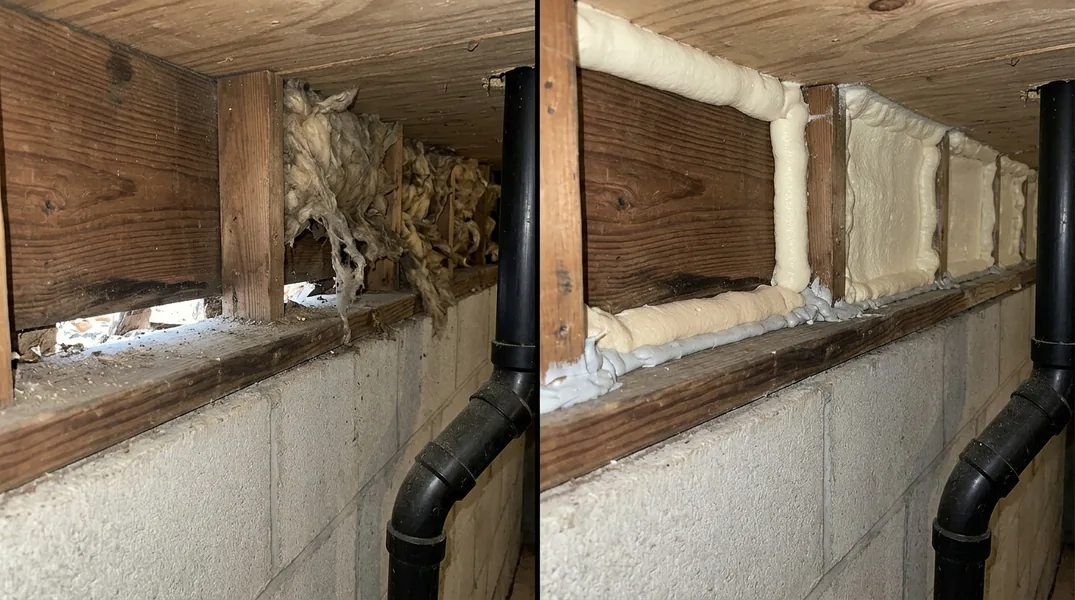
Attic Spray Foam Insulation becomes the right choice when your home has significant insulation gaps, moisture issues, or structural challenges that air sealing alone cannot address. Open Cell Spray Foam Insulation provides an R-value of approximately 3.5 to 3.6 per inch, while Closed Cell Spray Foam Insulation delivers 6.0 to 6.5 per inch. This means how thick should spray foam be depends on which type you choose and your target R-value.
For example, if you need to reach R-49 in your attic and you have no existing insulation, closed cell spray foam at 7.5 to 8 inches would accomplish this. Open cell would require 13 to 14 inches. The denser closed cell option also provides a vapor barrier, which is valuable in humid climates or attics prone to condensation. If your attic shows signs of water damage, mold, or recurring ice dams, spray foam's air-sealing and moisture-resistant properties often justify the higher investment.
Spray Foam Insulation R Value Per Inch: Choosing the Right Type
The spray foam insulation r value per inch is one of the most important factors in your decision. Open cell foam is lighter, more affordable, and easier to install in standard attic spaces. It's permeable, meaning it allows some moisture vapor to pass through, which can be an advantage in dry climates or well-ventilated attics. However, closed cell foam's superior R-value per inch and built-in vapor barrier make it the preferred choice for many Lexington homeowners dealing with older homes, high humidity, or attics with complex geometry.
Your contractor should perform a detailed assessment to recommend the right type and thickness. If you're trying to decide between air sealing plus blown insulation versus spray foam, the R-value per inch comparison is illuminating. A combination approach might involve sealing all air leaks, then adding 6 inches of open cell spray foam on top of existing insulation, achieving excellent results at moderate cost. This hybrid method is often overlooked but can deliver 80 percent of the performance benefit at 50 to 60 percent of the cost of full spray foam coverage.
Rebates: Offsetting Your Investment
One significant factor that changes the cost equation is the federal insulation rebates. Many local utility companies in Kentucky offer insulation rebates to encourage energy efficiency upgrades. These incentives apply to both air sealing and spray foam work, though the rebate amounts may differ.
Before deciding that full spray foam is too expensive, contact your utility provider to ask about available free estimate programs and rebate structures. Some rebates are performance-based, meaning you receive a credit after demonstrating energy savings through a blower door test. Others are installed-based, offering a flat rebate per square foot of insulation added. When you factor in these incentives, the true out-of-pocket cost for spray foam becomes much more competitive with partial air sealing approaches.
Getting a Professional Assessment Near You
The best way to determine whether your home needs air sealing alone, a hybrid approach, or full spray foam installation is to schedule a professional energy audit with Lexington Spray Foam Insulation. Our team serves all of Lexington and uses thermal imaging and blower door testing to pinpoint exactly where your home is losing energy.
We'll evaluate your current insulation, identify air leaks, review your energy bills, and explain your options in plain language. Some homes truly need comprehensive spray foam coverage. Others benefit more from targeted air sealing and supplemental insulation. Our goal is to recommend the solution that delivers the best return on investment for your specific situation, not to oversell a service you don't need. Call us at (859) 309-7396 or visit our website to request a free estimate today.
Looking for a professional spray foam insulation contractor in Lexington? Lexington Spray Foam Insulation responds fast for all your spray foam insulation needs.
Get a Free Quote