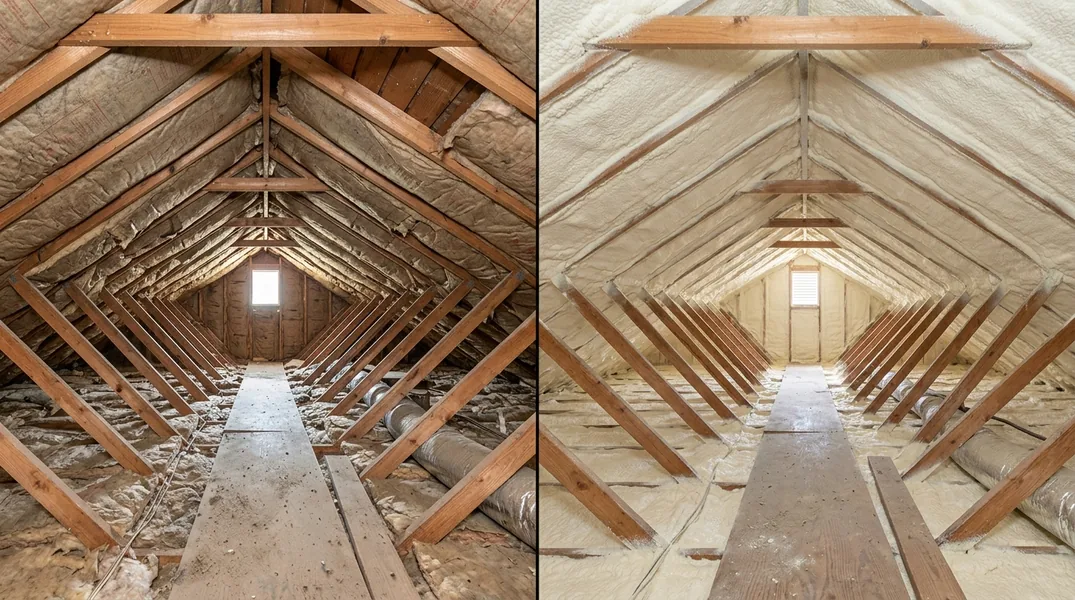
Why Mid-Century Ranches in Lexington-Fayette Need Insulation Upgrades
Mid-century ranch homes have a timeless charm that makes them popular throughout Lexington. Built between the 1940s and 1970s, these single-story residences feature open floor plans, large windows, and efficient use of space. However, their age comes with a significant downside: most were insulated with materials that have degraded substantially over the decades.
The original insulation in these homes typically consisted of fiberglass batts or minimal cellulose, both of which settle and lose effectiveness over time. Kentucky's variable climate, with hot summers and cold winters, puts tremendous strain on aging insulation systems. Homeowners in Lexington often notice rising energy bills, uneven temperatures from room to room, and moisture problems in their attics. These are clear signs that the insulation is no longer performing its job. The good news is that modern solutions like Attic Spray Foam Insulation can restore comfort and efficiency to these classic homes.
Spray Foam vs Blown In Insulation: Which Is Better for Your Attic?
When it comes to the best insulation for attic spaces, homeowners often find themselves comparing spray foam with blown in insulation. Both options have their merits, but they work in fundamentally different ways. Blown in insulation, typically made from cellulose or fiberglass, is literally blown into attic cavities using specialized equipment. It fills spaces quickly and is generally less expensive upfront. However, blown in insulation settles over time, losing R-value and leaving gaps around obstacles like pipes, wires, and ductwork.
Spray foam, by contrast, expands as it's applied, creating an airtight seal that conforms to every corner and crevice. Open Cell Spray Foam Insulation offers excellent sound dampening and flexibility, while Closed Cell Spray Foam Insulation provides superior moisture resistance and structural reinforcement. For mid-century ranches with aging attics prone to moisture issues, spray foam's superior air-sealing capability often outweighs the higher initial cost through long-term energy savings and reduced HVAC strain.
Spray Foam vs Fiberglass: Understanding the Performance Difference
Fiberglass insulation has been a standard choice for decades, and many mid-century ranches still rely on it. Fiberglass batts are affordable, easy to install, and come in convenient rolls or sheets. The problem is that fiberglass only insulates where it makes contact. Air can flow around it, through gaps, and past poorly fitted edges. Over 50 years, fiberglass also compresses under its own weight, reducing its R-value significantly. Additionally, fiberglass doesn't prevent air leakage, which accounts for roughly 30 percent of home heating and cooling loss.
Spray foam addresses these shortcomings directly. It creates a continuous thermal barrier with no gaps, seams, or voids. The expansion process ensures complete coverage even in irregular spaces. Spray foam also serves as an air barrier, which fiberglass cannot do. For homeowners in Lexington-Fayette looking to maximize energy efficiency and comfort, upgrading from fiberglass to spray foam typically results in noticeable improvements in temperature consistency, reduced drafts, and lower monthly utility bills. The investment in superior performance often pays for itself within a few years.
Spray Foam vs Cellulose: Comparing Modern Insulation Solutions
Cellulose insulation is an eco-friendly option made from recycled paper, and it's often touted as a sustainable alternative to fiberglass and spray foam. Like blown in fiberglass, cellulose is installed by blowing it into attic cavities. It does offer better air-sealing properties than loose fiberglass and has a slightly higher R-value per inch. However, cellulose shares a critical weakness with other blown in materials: it settles over time. A cellulose installation that provides R-38 coverage today may deliver only R-30 within a decade.
Spray foam maintains its R-value indefinitely because it doesn't settle or compress. It also provides superior moisture management, which is particularly important in attics where condensation can develop during temperature swings. While cellulose is cheaper initially, spray foam's longevity and performance make it the better long-term investment for homeowners serious about energy efficiency. If you're weighing these options for your mid-century ranch in Lexington-Fayette, consider that spray foam's upfront cost is offset by decades of consistent performance and reduced heating and cooling expenses.
Attic Spray Foam Insulation Near Me: When to Call a Professional
If you're a homeowner in Lexington-Fayette searching for attic insulation solutions, knowing when to call a professional is crucial. While some home improvement tasks invite DIY approaches, spray foam installation is not one of them. Applying spray foam requires specialized equipment, protective gear, and technical knowledge about mixing ratios, application temperatures, and safety protocols. Improper installation can result in incomplete coverage, off-gassing, poor R-value performance, or even structural issues.
Lexington Spray Foam Insulation has served Lexington homeowners for years, delivering professional-grade attic insulation that transforms comfort and efficiency. Our team understands the specific challenges of mid-century ranch homes, from outdated ventilation systems to unusual roof configurations. We provide a thorough inspection, honest assessment of your current insulation, and a customized solution tailored to your home's needs. If you're noticing energy inefficiency, temperature imbalances, or moisture concerns in your attic, reach out to us at (859) 309-7396 for a free estimate and expert guidance.
Attic Spray Foam Insulation Cost in Lexington-Fayette: What to Budget
Cost is often the first question homeowners ask when considering insulation upgrades, and it's a fair one. Spray foam typically costs more per square foot than blown in fiberglass or cellulose, usually ranging from 1.50 to 3.00 dollars per board foot depending on the type (open cell or closed cell) and your home's specific requirements. For a typical mid-century ranch attic of 1,200 to 1,500 square feet, budget between 2,000 and 5,000 dollars for a complete spray foam installation. This higher upfront cost often surprises homeowners accustomed to fiberglass or cellulose pricing.
However, the long-term financial picture tells a different story. Spray foam's superior air-sealing and permanent R-value retention mean you'll see measurable energy savings starting immediately. Many homeowners report 15 to 30 percent reductions in heating and cooling costs after upgrading to spray foam. Over a 20-year period, these savings easily exceed the initial investment. Additionally, improved insulation extends the life of your HVAC system by reducing strain, and it can increase your home's resale value. When evaluating pricing for your specific project, Lexington Spray Foam Insulation provides transparent estimates with no hidden fees. Contact us at (859) 309-7396 or request a free estimate to understand exactly what your attic upgrade will cost and the savings you can expect.
Looking for a professional spray foam insulation contractor in Lexington? Lexington Spray Foam Insulation responds fast for all your spray foam insulation needs.
Get a Free Quote