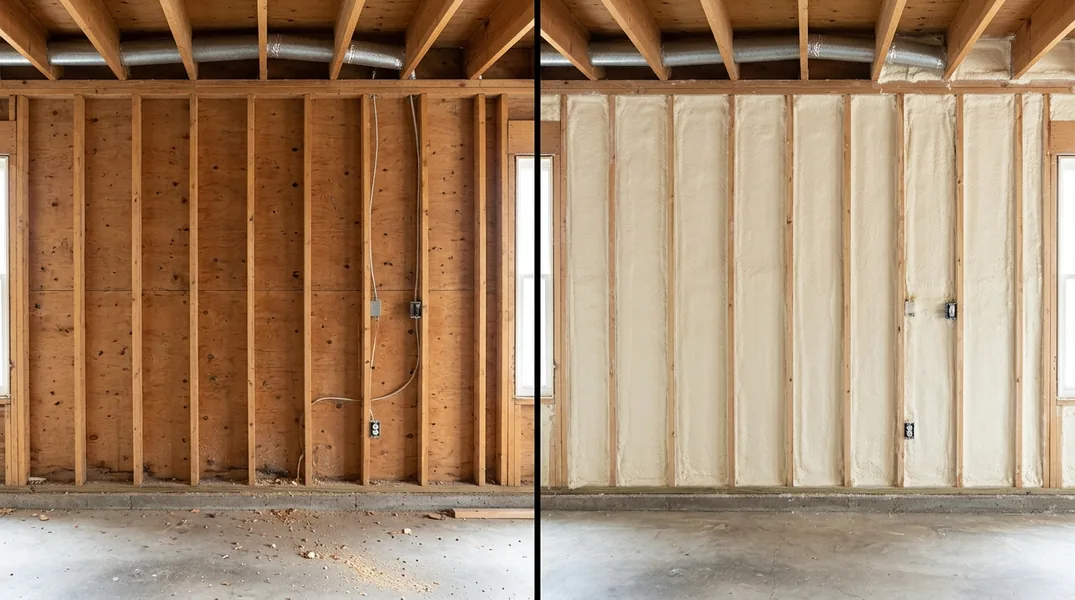
Understanding Spray Foam Insulation for Your Lexington Home
If you own a home in Lexington, you've likely heard about spray foam insulation as a modern solution to rising energy bills and uncomfortable indoor temperatures. But when it comes to attic spray foam insulation, homeowners often face a critical decision: open cell or closed cell? This choice can significantly impact your home's energy efficiency, comfort level, and long-term maintenance costs.
Spray foam has revolutionized how we think about home insulation. Unlike traditional fiberglass batts or blown-in cellulose, spray foam expands to fill every crack, crevice, and gap in your attic. This superior air sealing creates what professionals call a sealed attic insulation system, which prevents heat loss in winter and heat gain in summer. The result is a more comfortable home and lower utility bills year-round.
However, not all spray foam is created equal. The two primary types, open cell and closed cell, have distinct properties, performance characteristics, and applications. Understanding these differences will help you make an informed decision about which solution best fits your Lexington home's specific needs and budget.
Open Cell Spray Foam: The Flexible, Cost-Effective Choice
Open Cell Spray Foam Insulation is a lighter, more flexible material that expands significantly after application. The foam's cellular structure contains open pockets that allow air and moisture to pass through, which is why it's sometimes called semi-permeable insulation. For homeowners in Lexington looking for an economical insulation upgrade, open cell foam offers several compelling advantages.
The primary benefit of open cell spray foam is its lower pricing compared to closed cell alternatives. Open cell typically costs between 35 to 50 percent less per board foot, making it an attractive option for budget-conscious homeowners. Additionally, open cell foam provides excellent sound dampening properties, making it ideal if you want to reduce noise transmission through your attic or walls. The material has an R-value of approximately 3.5 to 3.6 per inch, which is respectable for most residential applications.
One important consideration with open cell foam is its moisture permeability. Because the cellular structure allows water vapor to pass through, it requires proper ventilation in your attic. This characteristic makes open cell an excellent choice for vented attic spaces, where air circulation naturally manages any moisture accumulation. If your home has traditional roof ventilation with soffit and ridge vents, open cell spray foam can work effectively and provide superior insulation compared to conventional materials.
Closed Cell Spray Foam: Maximum Protection and Performance
Closed Cell Spray Foam Insulation represents the premium option for attic insulation projects. This denser foam contains closed pockets of gas that create a vapor barrier, making it a completely impermeable insulation system. For homeowners seeking maximum performance and an unvented attic spray foam solution, closed cell delivers superior results.
The standout feature of closed cell foam is its exceptional R-value of approximately 6.0 to 6.5 per inch, nearly double that of open cell. This higher insulating power means you need less material thickness to achieve your desired thermal resistance. For attics with limited space or homes requiring maximum insulation efficiency, closed cell foam provides superior performance. The material's inherent moisture resistance also eliminates the need for additional vapor barriers, simplifying installation and creating a more robust thermal envelope.
Closed cell foam's impermeability makes it ideal for creating an unvented attic system. When properly installed, closed cell spray foam seals your attic completely, preventing air leakage and moisture infiltration. This approach has gained popularity among builders and homeowners because it creates a conditioned attic space that performs like a room inside your home's thermal envelope. The structural rigidity of closed cell foam also provides additional bracing strength to roof assemblies, which some building codes recognize as a structural benefit.
The trade-off is cost. Closed cell spray foam typically runs 50 to 100 percent more expensive than open cell alternatives, reflecting its superior performance characteristics and more complex application process. However, the energy savings and durability benefits often justify the investment over the 20 to 30 year lifespan of the material.
Attic Spray Foam Insulation Cost in Lexington-Fayette Urban County: What to Budget
When planning an attic insulation project, cost is naturally a primary concern for most homeowners. The pricing for spray foam insulation varies based on several factors including the type of foam, your attic's square footage, existing insulation, and accessibility. In Lexington, typical spray foam attic projects range from $1,500 to $5,000 or more, depending on these variables.
Open cell spray foam generally costs between $0.50 to $1.00 per board foot, while closed cell ranges from $1.00 to $1.50 or higher per board foot. For a typical 1,500 square foot attic with 6 inches of insulation coverage, you might expect to invest $2,000 to $3,500 for open cell, or $3,500 to $6,000 for closed cell. These figures include material and professional installation labor. While closed cell represents a larger upfront investment, the superior R-value means you achieve better results with less material, potentially offsetting some cost difference.
The best way to understand the true cost for your specific home is to request a free estimate from Lexington Spray Foam Insulation. Our team can assess your attic's current condition, recommend the appropriate foam type for your needs, and provide transparent pricing information. Call us at (859) 309-7396 to schedule your consultation.
Choosing the Right Spray Foam for Your Attic: Key Factors to Consider
Selecting between open cell and closed cell spray foam requires evaluating your specific home situation, climate, and long-term goals. Both products offer genuine benefits, and the right choice depends on your priorities and budget constraints. Homeowners should consider their attic's current ventilation system, the climate in the Lexington area, existing moisture issues, and energy efficiency targets.
If your home has a traditionally vented attic with soffit and ridge vents, open cell spray foam can be an excellent choice. The material's semi-permeable nature works harmoniously with natural ventilation, allowing any moisture to escape while providing superior insulation compared to conventional materials. This approach is particularly cost-effective for homeowners prioritizing energy savings without major structural changes.
Conversely, if you're planning a more comprehensive attic renovation or want to create a fully conditioned attic space, closed cell spray foam and an unvented attic spray foam system might be worth the additional investment. This approach eliminates thermal bridging through roof framing, provides superior moisture control, and can even allow you to install HVAC equipment or storage in your attic without temperature fluctuations.
Climate considerations also matter. Lexington's humid subtropical climate with hot summers and mild winters means moisture management is important. Closed cell foam's vapor barrier properties provide excellent protection against seasonal moisture variations, while open cell foam relies on proper ventilation to manage humidity.
Professional Installation: Why Expertise Matters for Your Lexington Home
While spray foam insulation offers tremendous benefits, proper installation is absolutely critical to achieving optimal performance. Both open cell and closed cell foams require specialized equipment, training, and attention to detail. Improper application can result in inadequate coverage, inconsistent R-values, or moisture problems that compromise your investment.
Professional installers understand the nuances of each foam type and how to apply them correctly in different attic configurations. They ensure proper air sealing around penetrations, maintain consistent foam density, and address moisture management appropriately for your specific situation. At Lexington Spray Foam Insulation, our experienced technicians have completed countless attic projects throughout Lexington, and we understand the unique challenges local homes face.
We also serve surrounding communities including Nicholasville, Georgetown, and Winchester. Whether you're interested in open cell or closed cell spray foam, or even exploring Wall & Injection Foam Insulation for other areas of your home, we have the expertise to recommend the best solution and execute it flawlessly.
If you're ready to improve your home's energy efficiency and comfort, contact Lexington Spray Foam Insulation today at (859) 309-7396 or request a free estimate online. Our team looks forward to helping you make the right choice for your attic insulation project.
Looking for a professional spray foam insulation contractor in Lexington? Lexington Spray Foam Insulation responds fast for all your spray foam insulation needs.
Get a Free Quote